The summit is the photograph everyone comes home with. But the quieter part of a winter trek often happens much earlier: under the trees, before the day has found its rhythm.
A quieter world, one step at a time
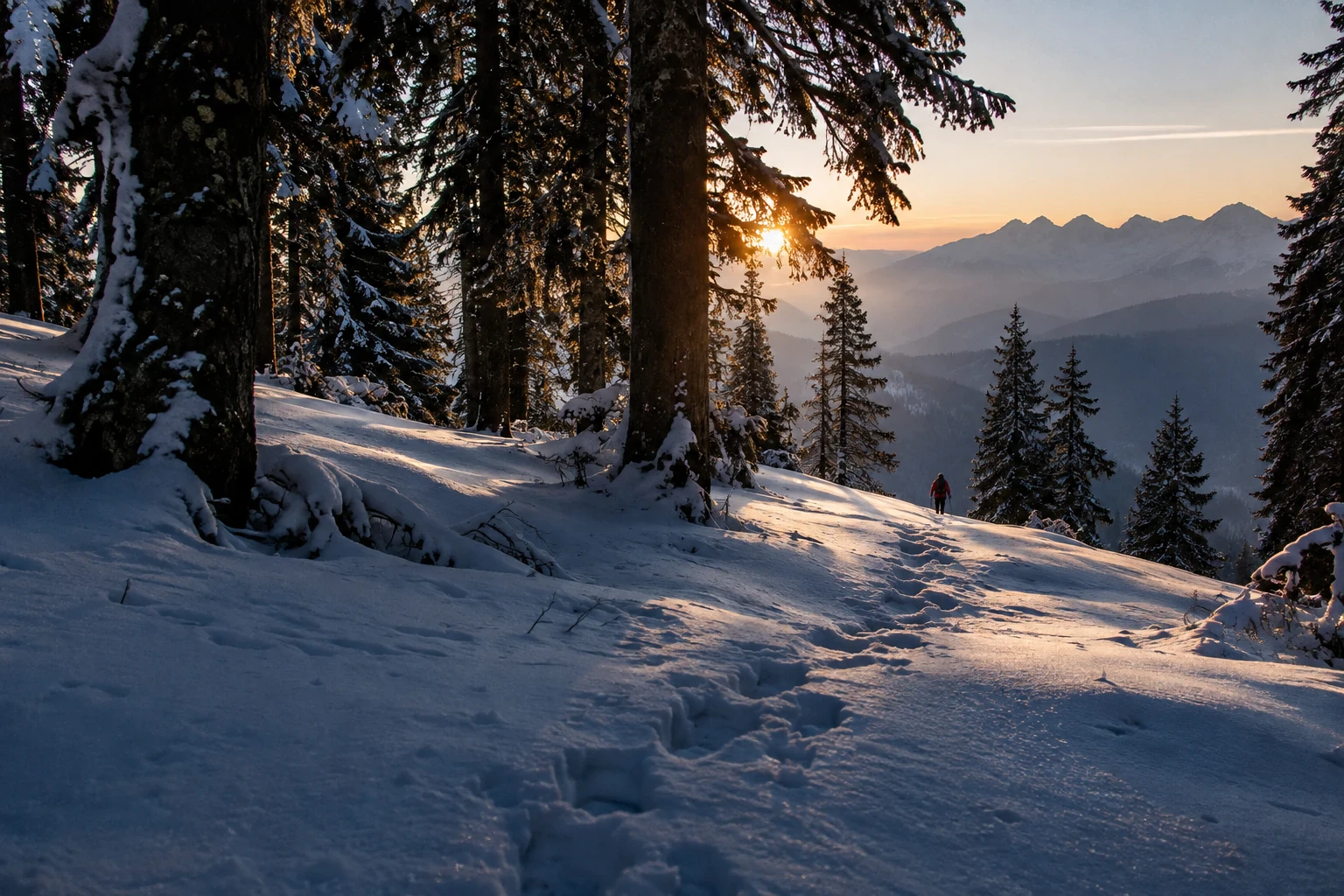
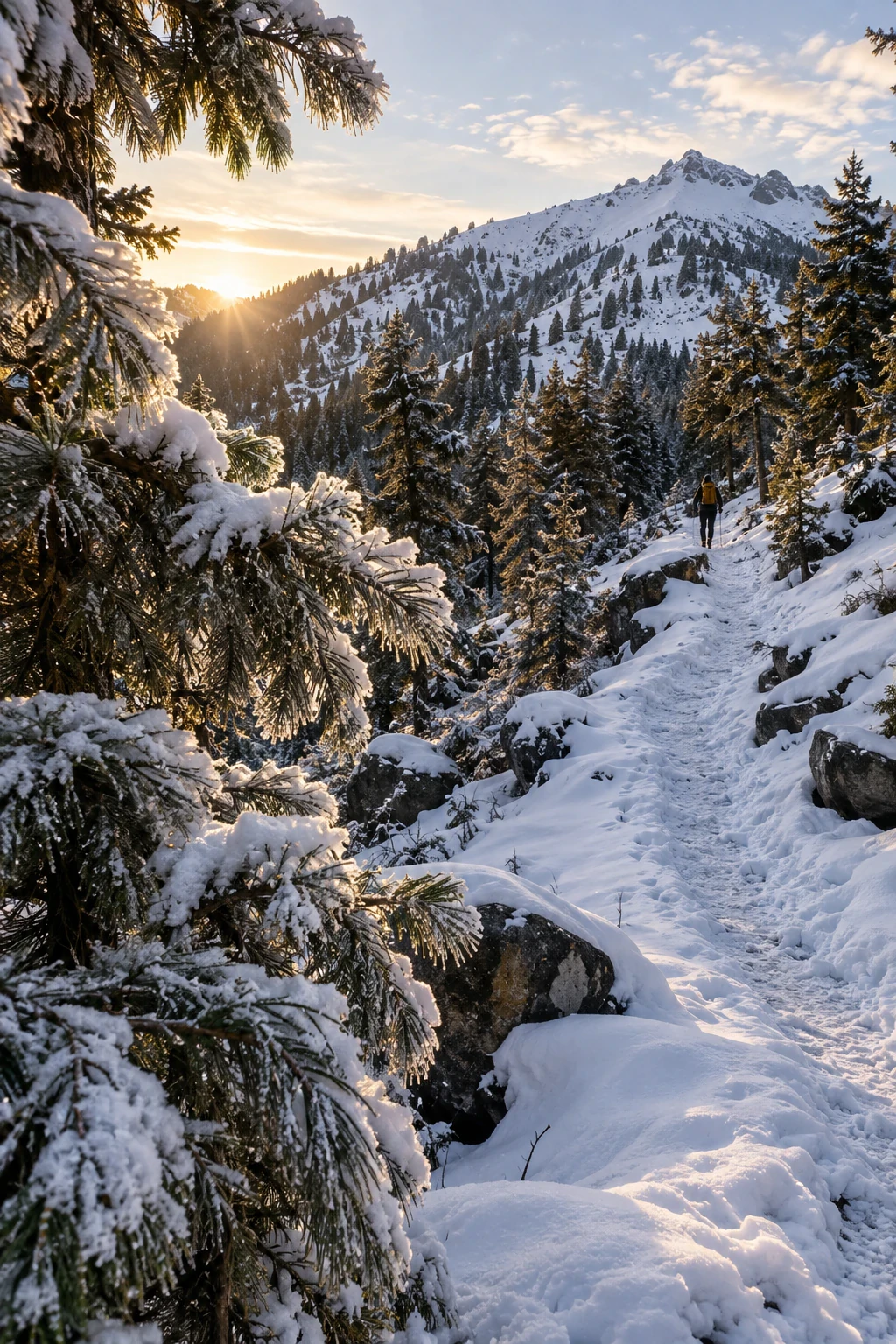
A winter forest asks you to notice small things. Snow rests on the upper side of a branch. A patch of sunlight reaches the trail long before it reaches the ground beside it. Footprints make a thin line through an otherwise uninterrupted surface.
There is no need to turn every pause into a photograph. Sometimes it is enough to look back along the path and see how little of it you have covered—and how much you have already noticed. The forest is part of the journey, rather than an obstacle between camp and the view.
Leave a little room in the day for what you did not come looking for.
Between the camp and the ridge
Kedarkantha brings together forest walking, winter camps and an open summit landscape. Their contrast gives the route its character: sheltered stretches beneath trees, then a much wider horizon as the landscape opens.
Conditions shape how that transition feels. Snow cover, visibility and the pace of the group vary. A photograph cannot promise the weather you will find, so plan around the route and the season rather than a single picture. Ask the team what current conditions mean for your departure.
Look without rushing
Keep your camera easy to reach without making it a distraction from your footing. Stop somewhere the guide considers suitable before changing lenses or reaching into your pack. One considered frame can say more than a stream of images made while walking.
Try looking for the smaller composition: the texture of a branch, the line of footprints, or the contrast between warm light and blue shadow. A mountain does not need to fill every photograph to remain present in it.
Bring the feeling home
When you return, keep a few words beside the photographs. Where did the forest open? What made you stop? Which part of the day felt longer than it really was? Those details help a journey remain yours after the route names and camp dates begin to blur.
A winter trek can hold both a summit and a quiet morning. Make space for both. The destination gives the walk a direction; the moments between give it something to remember.
A little further from the everyday.
Back to the journal