Some journeys are measured in height gained. Others become memorable through the things you pass: a river bend, a village path, a doorway, a conversation. Har Ki Dun invites that second kind of attention.
Follow the valley, not just the destination
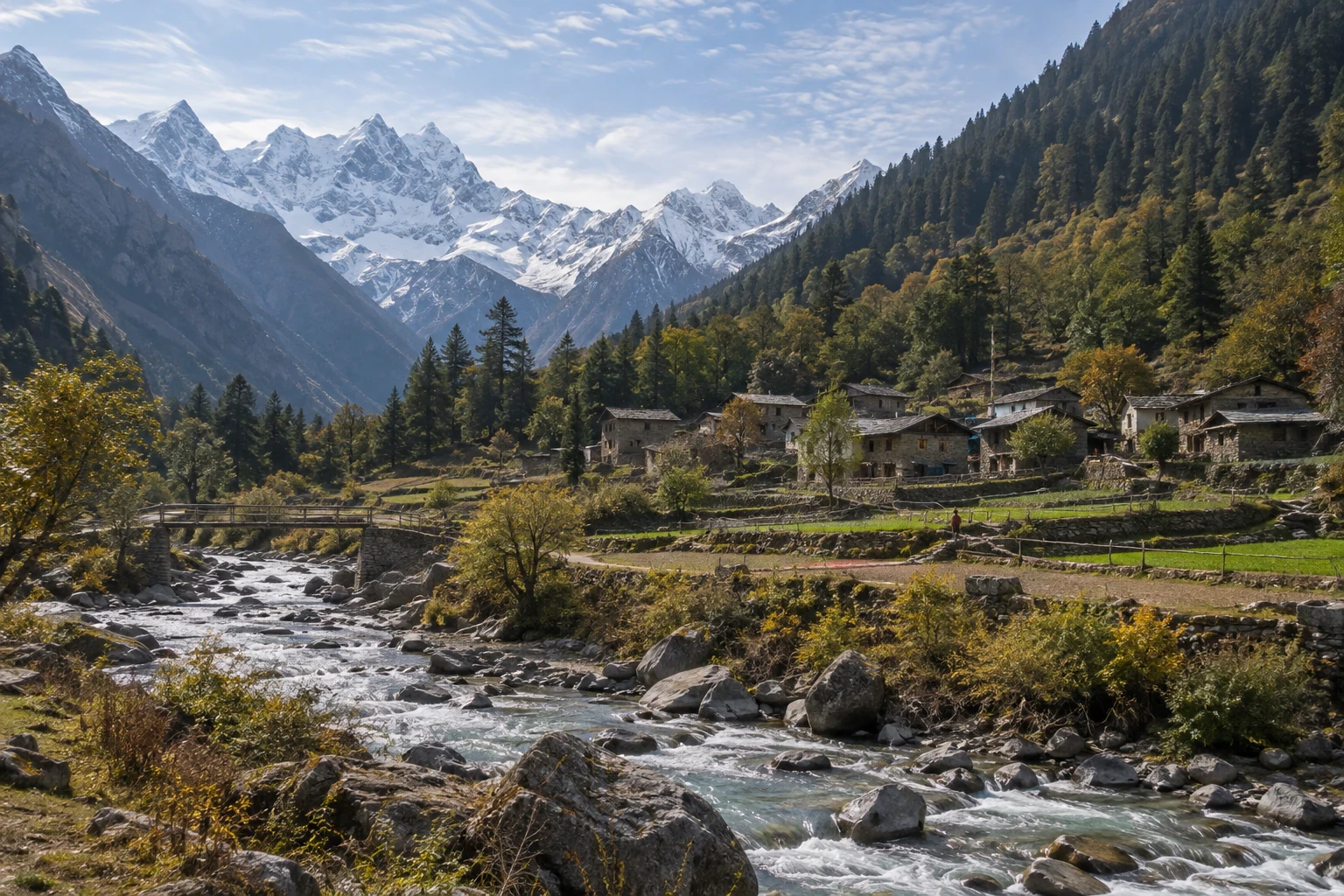
On a valley walk, the landscape reveals itself gradually. The same river can appear beside the trail, far below it, and then out of sight. A mountain that looks close in the morning can remain on the horizon for hours. The route is richer when these changes become part of what you are watching.
Har Ki Dun is a longer Garhwal journey with village landscapes and mountain terrain. Give yourself time to read the itinerary beyond its final destination. The walking days, approaches and overnight stops explain the experience more clearly than a single headline photograph.
A landscape people live in
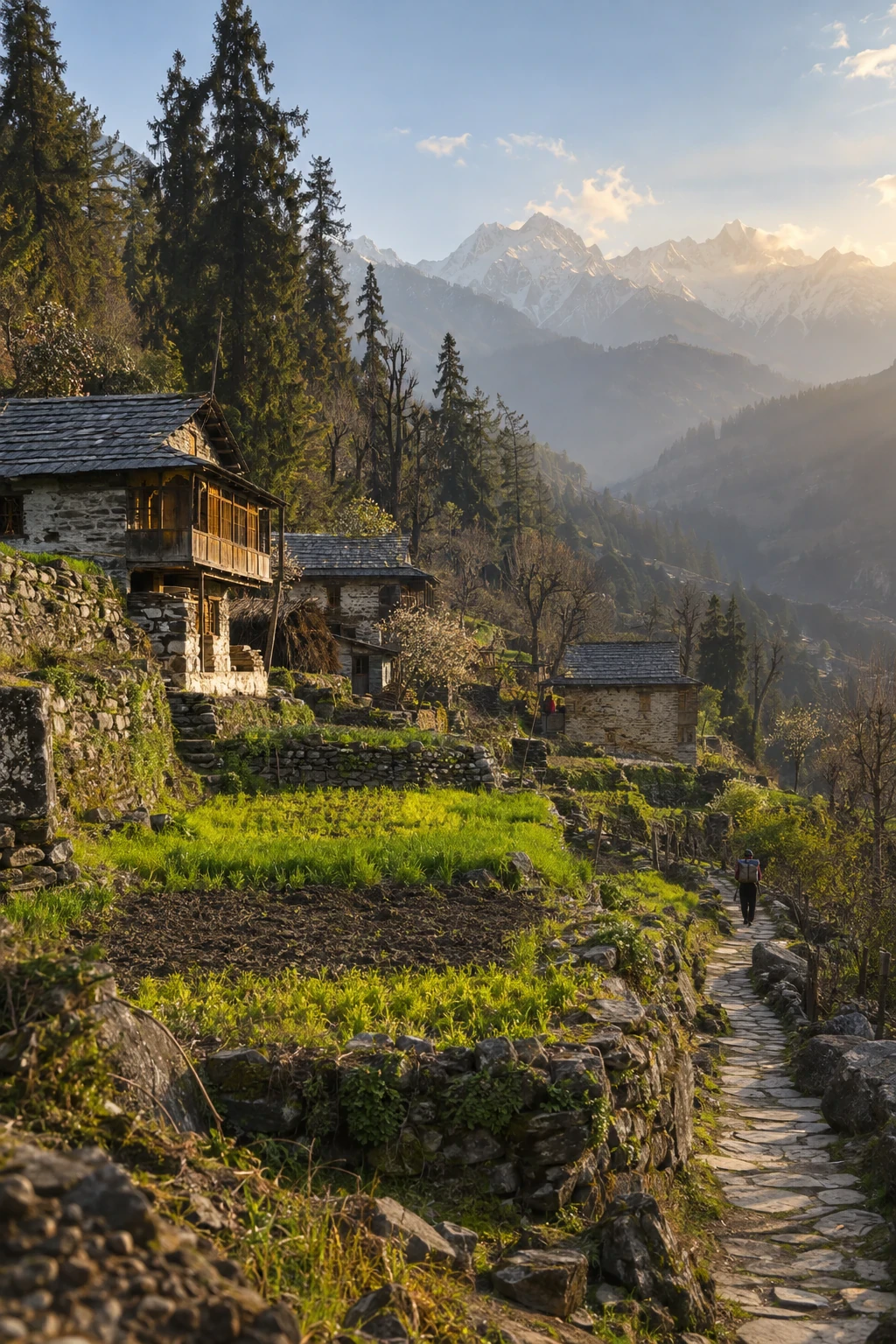
A village is a home before it is a view. Stay on the agreed route, leave doorways and working spaces clear, and ask before photographing a person or stepping into a private courtyard. A guide can help you understand when a conversation is welcome and when it is better to keep moving.
Let curiosity be patient. There is no need to collect a story from every person you meet. A place can be meaningful without becoming content, and a thoughtful traveller leaves people the choice of how they take part in an encounter.
A place can be meaningful without becoming content.
The details between the big views
Notice how the path changes underfoot, how the light moves across a field, or where the sound of the river returns. These are useful ways to stay present during a long walking day. They also make your photographs more personal than another version of the same distant peak.
If you keep a notebook, write down one small observation at the end of each day. Choose a detail you would otherwise forget. Over a week, those notes become a second map of the journey—one made from attention rather than distances.
Plan for the whole walk
Before choosing a departure, ask about daily walking time, the overnight arrangements, trail conditions and travel to the starting point. Longer journeys also need room in your calendar for arrival, return travel and changes in mountain weather.
Choose a route for the kind of days you want to spend, as well as the landscape you want to see. If a valley, its villages and its changing horizons are what draw you outdoors, there is no reason to rush them into the background.
A little further from the everyday.
Back to the journal