Preparation starts before the packing list. A good mountain journey begins with a route that suits your experience, enough time to adjust, and an honest conversation about what the days will ask of you.
01 / Read the itinerary, not just the summit height
Compare the length of the walking days, terrain, overnight stops and how quickly the route gains altitude. A short trip can still be demanding. Ask how the schedule allows travellers to adjust and what the team does when weather or the group’s condition changes the plan.
The CDC advises gradual ascent to help acclimatization. Fitness does not prevent altitude illness, so a strong training routine cannot replace time to adjust. If you have health concerns or a history of difficulty at altitude, discuss the actual itinerary with a clinician before departure.
02 / Make the unfamiliar familiar
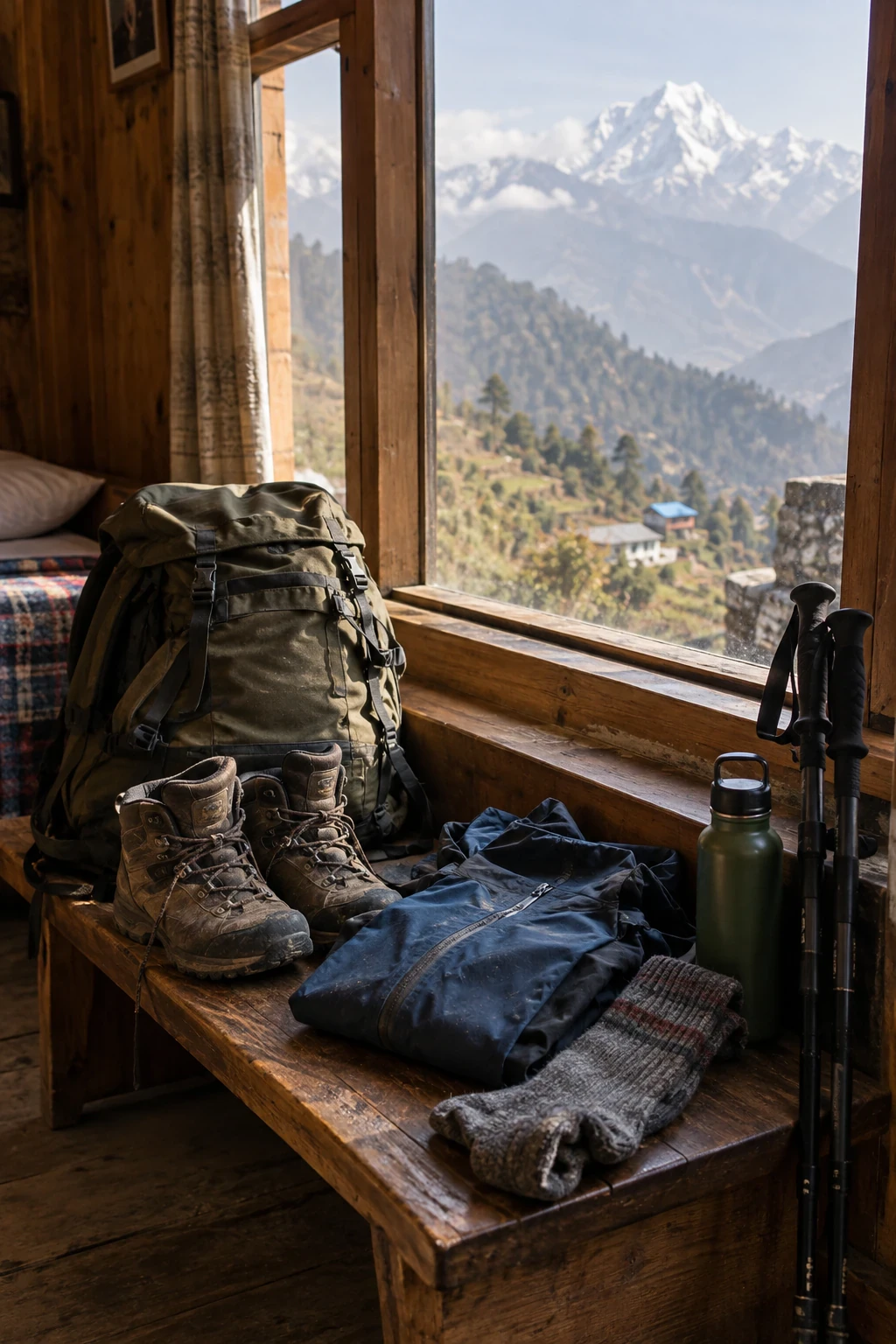
Walk in the footwear you intend to bring. Practise putting on your layers and finding your waterproof jacket without emptying the whole pack. A simple local walk can reveal an uncomfortable strap or a pocket you cannot reach before those details follow you into the mountains.
Ask for a route-specific packing list instead of buying everything at once. Confirm what the operator provides, what you carry yourself and which items may be rented. Familiar, suitable equipment is more useful than a collection of new things you have not tried.
03 / Have the important conversation early
Tell the team about your previous walking experience and any practical concerns. Ask who leads the trek, how communication works, and what happens if someone needs to stop. Clear answers before booking make it easier to understand the support available on the route.
At altitude, report feeling unwell promptly to your guide rather than trying to keep up quietly. The CDC advises against continuing to a higher sleeping elevation with altitude symptoms and recommends descent when symptoms worsen. Do not treat this article as an individual medical plan.
Before you go / A conversation checklist
- Daily walking time and overnight elevations
- Time allowed for acclimatization
- Equipment provided, rented and carried
- Guide communication and emergency arrangements
- Arrival, return travel and schedule flexibility
04 / Leave room in the plan
Protect your arrival day from a tight chain of connections where possible. Keep essential documents and the team’s contact details accessible. Confirm the meeting point and return arrangements before travelling, so the first day is spent getting oriented rather than solving avoidable logistics.
The aim is to arrive informed and able to ask questions. Choose a journey you can approach with curiosity, rather than one you feel obliged to prove yourself on. Preparation should make space for the experience, not turn it into a performance.
Further reading
CDC Yellow Book: High-altitude travel and altitude illnessA little further from the everyday.
Back to the journal